Posts

Showing posts with the label sagas

A Resource List for Modern Heathens
Image
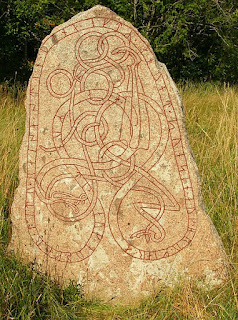
Runic Stone Upplands runinskrifter U839. Accessed from WikiMedia Commons. I have been noticing more and more that many Heathens don’t realize they can access a lot of the source material online, often for free. So I thought it might be useful to link you up with some places to find good sources. I am sure there are many more out there I am missing, and I will try to update these when I come across more good ones. I am also including sites that have fairly reputable takes on Modern Heathenry. Please note I don’t endorse any of these sites. This is purely a reference list. The materials are worthwhile, but I cannot speak for whoever posted them there. Some discernment is necessary on the part of the reader. The author of this blog does not agree with all opinions or takes of people whose content is listed. Please Heathen in a way that is right for you. General: Skaldic.org has a large collection of all things Norse. https://skaldic.org/m.php?p=onw   While mostly more broadly Indo-Eur...

Understanding the Modern Aun Cycle

Image
So I have seen some interesting discourse for the start of the Aun year, which started on the New Moon (according to Rune Rasmussen’s reckoning.) There seems to be a bit of confusion why the name Aun is associated with the 9 year cycle. Rune didn’t just make that up. It is likely that the story of King Aun was in part a story that taught how to reckon the 9 year cycle to the elder Heathens. (The 9 year cycle is 9 years inclusive, or by modern reckoning, which is exclusive reckoning… 8 years.) So what is the Aun story, for those not familiar?    In Upsal's town the cruel king Slaughtered his sons at Odin's shrine -- Slaughtered his sons with cruel knife, To get from Odin length of life. He lived until he had to turn His toothless mouth to the deer's horn; And he who shed his children's blood Sucked through the ox's horn his food. At length fell Death has tracked him down, Slowly, but sure, in Upsal's town. - Y...

Barnstokk: Apple or Oak?

Image
I have trees on my mind at the moment, so I want to unpack a bit of the symbolism of the tree Barnstokk. If you have ever read the Saga of the Völsungs you will recognize that Barnstokk is the name of the tree that grows in King Völsung’s hall. There is a lot of symbolism that the modern reader may overlook to do with trees that could be relevant to the story. First of all, it is an old custom for a family to plant a tree outside their home that is their tuntre, or guardian tree. The tree, if nurtured well, holds the family’s luck. If something happens to the tree then the luck of the family will also fail, usually resulting in the family perishing. It is unusual for the tree to be protected inside the hall, as is the case with Barnstokk.  There are a few other strange things to do with this particular tree. Odin, disguised as an old man, appears and thrusts a sword into Barnstokk, declaring that whoever can pull the sword out of the tree will have it. King Siggeir tries to pull it...

Odin, a Trickster?

Image
I was recently watching a video by Arith Härger entitled “Animism: The Trickster Spirit.” In it Arith is talking about what the purpose of Trickster spirits are in lore from around the world. Of course he is using Loki as an example in this context. However, it had me revisiting one of my recurring thoughts about Odin and how he sometimes also plays a Trickster role in the lore.  Odin is able to shapeshift into animals, but also disguise his own appearance to men, and the Jotunn, and even his own son, Thor. It is always through a mix of wile and charm that he gets his way. Odin disguises himself as Gagnráðr to challenge Vafþrúðnir, wisest of the Jotunn in a battle of wits. In another story Odin disguises himself as Grimnir to check his foster-son Geirroth’s hospitality in a wager with Frigg. Further on in the Poetic Edda, Odin disguises himself as Greybeard, a ferryman, and taunts Thor. In the Prose Edda Odin takes on the persona of Bölverkr to gain access to the mead of poetry. T...